You know you should be posting. You pick up your phone or think about getting a professional videographer in. You give up. Here are 10 specific ideas you can film ASAP — No excuses.
One of the reasons dental practices don’t post consistently isn’t budget. It’s not equipment. It’s not even time.
It’s standing in the practice at 12:30pm with a phone in your hand and absolutely no idea what to film.
Every dentist I’ve worked with now knows they should be creating content. Most of them even believe in it. But belief doesn’t fill a content calendar — ideas do. Specific ones. The kind where you read it, look up, and think “I could film that right now.”
That’s what this is. Ten prompts. Each one is filmable in under five minutes, with nothing more than the phone already in your pocket or by hiring your local videographer for this week. Pick one and go.
One rule before you start
Don’t overthink the hook. The biggest mistake practices make is spending 20 minutes trying to write a clever opening line and never actually filming anything. For every idea below, just start talking or start filming. You can trim the first three seconds in the edit. Done is better than perfect, every single time.
10 reels you can film this week
1. The view from the chair
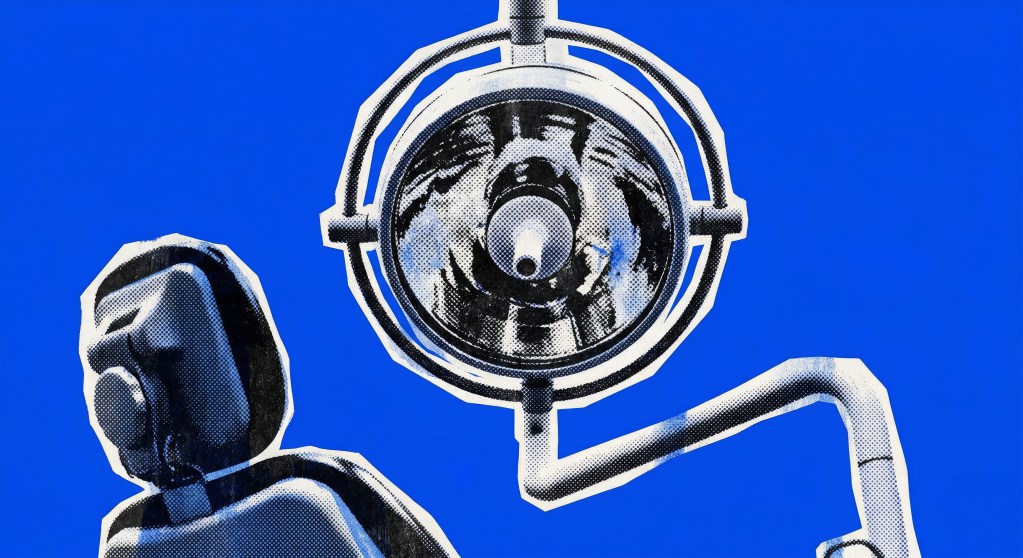
Hold your camera/phone at patient eye-level, pointing up at the overhead light. Film it for five seconds. Caption: “The view every patient gets. We try to make what happens next a lot less scary than this looks.”
Why it works: it’s an angle patients instantly recognise and rarely see from the outside. Relatable, slightly funny, zero clinical complexity.
2. The morning setup, sped up
Put your camera/phone on a stand or prop it against something at bench height. Hit record. Let your nurse do the morning tray setup at normal speed, then speed it up 4x in edit. Throw on a trending song through your preferred social media. The fast-motion is satisfying to watch. Caption: “Before the first patient walks in.”
Why it works: behind-the-scenes content consistently outperforms promotional content on Instagram. People are genuinely curious about what goes on before they arrive.
3. Name one thing patients always get wrong about your most popular treatment
Stand in front of your desk or clinical room. Look at the camera. Say: “The most common misconception I hear about [composite bonding / Invisalign / implants] is…” and answer it honestly in under 30 seconds. One take. Don’t re-record it five times.
Why it works: myth-busting content is one of the highest-performing formats in healthcare social media. It signals expertise without feeling like a sales pitch.
4. Before and after — but narrate it
Most before-and-after posts are silent. Film yourself holding up the photos (or show them on your phone screen) and talk through what actually changed and why. 20 to 30 seconds. Patients don’t just want to see the result — they want to understand it.
Why it works: narration adds authority and personality. It turns a static comparison into a mini consultation, which is far more likely to generate a DM than a silent split-screen.
5. Introduce one person on your team
Ask your receptionist, nurse, or treatment coordinator one question on camera: “What’s the most common thing nervous patients say when they arrive, and what do you tell them?” Film their answer. Don’t over-produce it. Post it with their name and role in the caption.
Why it works: patients choose practices based on people, not just credentials. Humanising your team builds the kind of familiarity that makes someone pick up the phone.
6. The instrument close-up with a one-line explainer
Pick up any instrument from your tray — a scaler, a matrix band, a curing light — and film a tight close-up. Caption or voiceover: what it is, what it does, and one thing patients would be surprised to know about it. Keep it to 15 seconds.
Why it works: everyday clinical objects look fascinating in close-up. This format works brilliantly as a Reel with no face on camera — useful for anyone who isn’t comfortable presenting to camera yet.
7. Answer the question you got asked most this week
At the end of every week, one question will have come up more than once in the chair. Film yourself answering it. Literally start with: “I got asked this three times this week…” That framing alone tells patients the content is relevant and real.
Why it works: it’s impossible to fake authenticity this way. You’re not guessing what patients want to know — they told you. And that specificity shows.
8. Show the difference good lighting makes
Film two quick photos of the same tooth model or typodont — one with your overhead surgery light, one with a proper photography light or even just natural light from a window. Put them side by side. Caption: “Lighting is why some dental photos look clinical and some look stunning. Same tooth. Two seconds apart.”
Why it works: this is educational, shareable, and subtly positions you as someone who cares about quality. Other dentists will engage with it heavily, which extends your reach.
9. A genuine patient reaction — if you have consent
If a patient has just seen their smile for the first time and they’re visibly thrilled, and you have consent in place, film that moment. Not a scripted testimonial — the unguarded reaction. Ten seconds of genuine emotion will outperform any promotional video you’ve ever posted.
Why it works: emotion is the most powerful driver of engagement on social media, full stop. Make sure your consent process is watertight before you post anything — see our guide on dental photo and video consent if you’re unsure.
10. Tell them something your competitors won’t
Pick one honest, slightly uncomfortable truth about your treatment or your industry and say it plainly. “Here’s the honest reason some composite bonding doesn’t last as long as it should…” or “What nobody tells you before you start Invisalign.” Real, useful, slightly brave.
Why it works: transparency is one of the most underused tools in dental marketing. The practices brave enough to say the thing others don’t are the ones patients remember — and trust.
The only rule that actually matters
Pick one idea from this list and film it before the end of today. Not tomorrow. Not after you’ve bought a new ring light or figured out your editing app. Today.
The practices that win on social media aren’t the ones with the best equipment or the biggest budgets. They’re the ones that show up consistently. One reel this week, every week, compounds into something that no ad spend can replicate.
And if you’d rather have someone handle the whole thing — strategy, filming, editing, posting — that’s exactly what we do at 230 Media. But start with one of these first. Prove to yourself it’s doable. Then we can talk about what’s possible when you scale it.
Get in touch at 230.media/contact if you want to explore what a proper content system looks like for your practice.