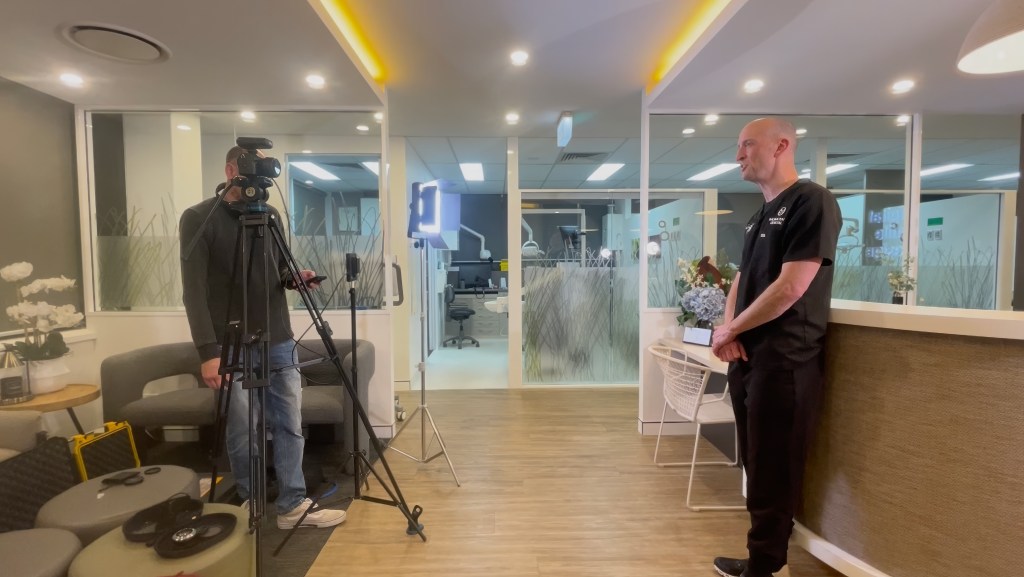
If you’ve never done professional video content for your dental practice before, it’s completely normal to feel unsure.
One of the most common things we hear is:
“I know we should be doing video… I just don’t know what I need to do to get ready.”
At 230 Media, we specialise exclusively in dental videography. Everything in this guide comes from filming hundreds of dental professionals — from first-time practices to high-end cosmetic clinics.
This beginner’s guide walks you through exactly what to expect, what matters most, and how to feel confident heading into your first video shoot.
What do I need to prepare for my first dental video shoot?
To prepare for your first dental video shoot, you only need three things: clarity on your goals, a tidy clinic, and a willingness to speak naturally on camera. You do not need scripts, camera experience, or a perfect practice environment.
That’s it.
First: what you don’t need to stress about
Let’s clear a few things up immediately.
You do not need:
- To memorise scripts
- To be “good on camera”
- A showroom-perfect practice
- To understand cameras, lighting, or sound
Our role is not just to film — it’s to guide you through the process so it feels calm, structured, and manageable.
What to expect on the day (so nothing surprises you)
Why will I be wearing a microphone?
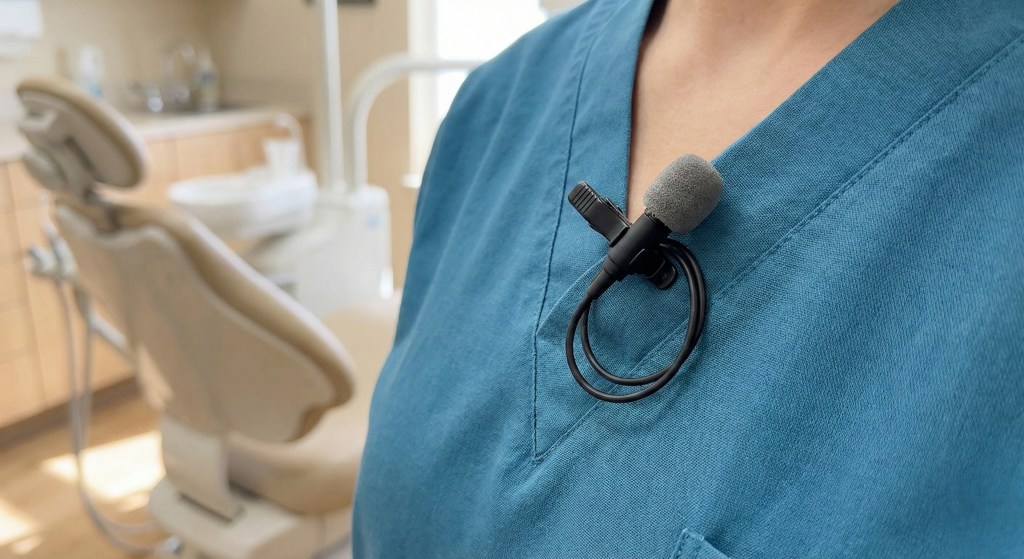
On every shoot, we use small lapel microphones for dentists and patients.
This usually involves:
- A small clip
- A short cable
- A tiny foam “fuzzy” on the end
We mention this because first-time clients are often surprised when a videographer approaches with equipment. Nothing invasive — just clear audio.
Why does sound quality matter more than video quality?
Poor audio breaks trust faster than imperfect visuals. Clear sound helps patients focus on your message and perceive professionalism, which is why lapel microphones are standard on dental video shoots.
What should dentists wear for a video shoot?
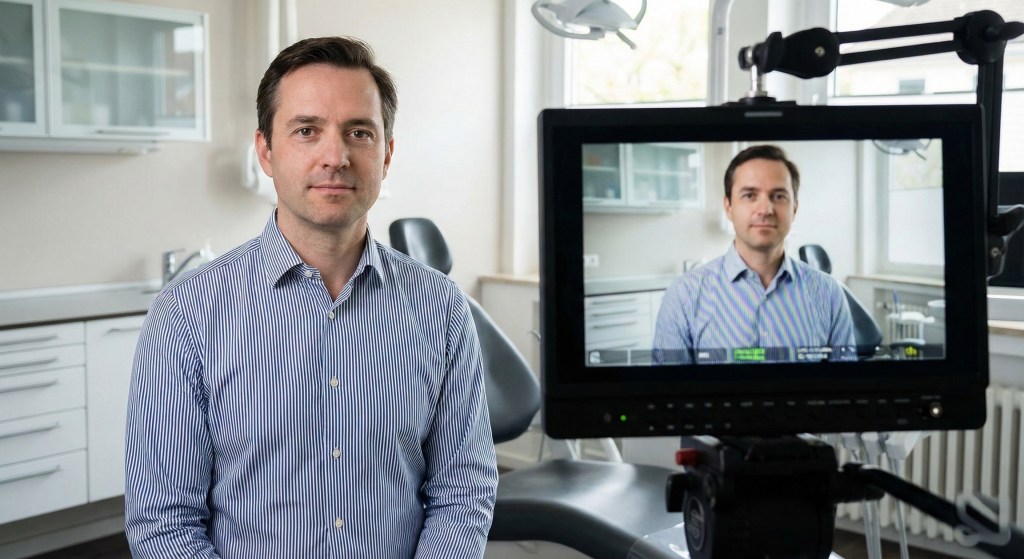
Dentists should wear clean, well-fitted clothing in neutral or solid colours. Avoid fine stripes, tight patterns, loud logos, or pure bright white, as these don’t translate well on camera.
Our recommendation: bring two outfits
- Clinical outfit
Scrubs or normal clinical wear such as: Stich or Figs — builds authority. - Casual or business-casual outfit
Used for interviews or personal brand content — helps you come across human and approachable.

That contrast works extremely well on screen.
When should hair and makeup be done for a dental video shoot?

Hair and makeup should be fully completed before the scheduled shoot start time. If hair and makeup runs into filming time, it can delay the entire shoot and lead to overtime, reduced coverage, or additional costs.
We’ve had shoots run three hours late purely because hair and makeup started after our team arrived — which resulted in overtime charges and fewer filming hours than planned.
If you’re organising hair and makeup:
- Schedule it to finish before the shoot start time
- Build in buffer time
- Treat it like clinical setup — not something that can run over
This keeps the day smooth, efficient, and stress-free.
Hydration matters more than you think
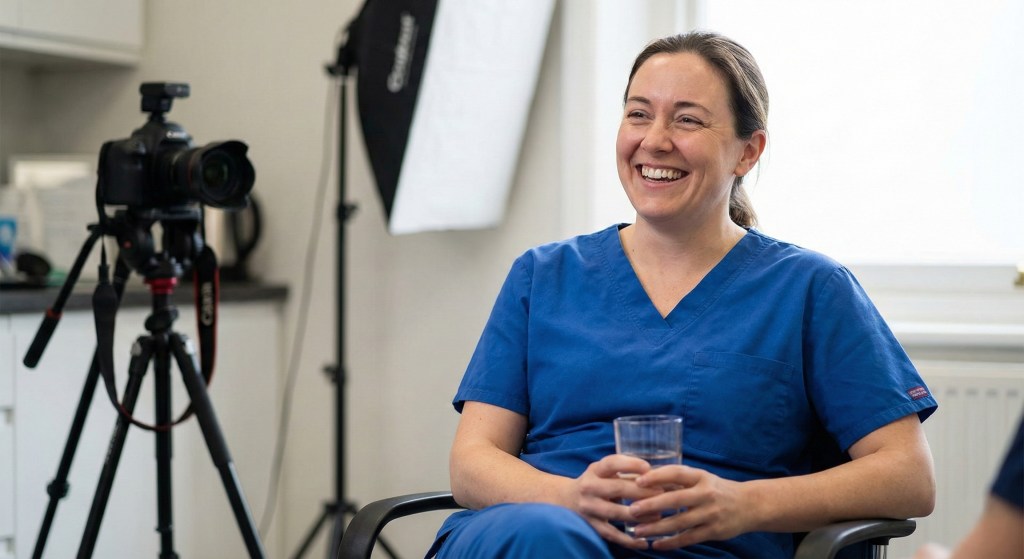
Talking on camera dries your mouth faster than you expect — especially when nerves kick in.
Have water available for:
- Yourself
- Any patients being interviewed
It’s a small thing that makes a big difference to comfort and delivery.
Do I need to script everything for a dental video shoot?
No. Most dental videos perform better when dentists speak naturally. Light preparation is helpful, but over-scripting often makes delivery feel stiff and less trustworthy to patients. Notes can be used between takes, not during recording.
Do I need a teleprompter for dental video content?
No. Teleprompters require significant practice to sound natural. For first-time dental video shoots, answering questions conversationally produces more authentic and engaging results.
Newsreaders spend years mastering teleprompters — it’s a real skill.
How to feel more comfortable on camera
If you feel awkward standing still:
- Lightly hold a pen
- Rest your hands together
- Use your hands when explaining things
This shifts part of your brain’s attention away from self-consciousness.
Smiling also matters more than most people realise.
If you watch Apple keynote speakers, you’ll notice they’re coached to use their hands and smile often — it makes viewers feel at ease.
Imperfection is actually your advantage
In a world where AI-generated content is becoming increasingly perfect, small imperfections are powerful.
Natural pauses.
Human delivery.
Genuine expression.
These things build trust — especially in healthcare.
Video is not live. If you make a mistake, you simply repeat the answer.
Camera confidence comes from repetition
Feeling awkward on camera is no different to learning a new clinical technique.
Think back to when you first learned something complex — whether it was advanced implant protocols or regenerative techniques. It probably felt uncomfortable at first.
Now it’s second nature.
Camera confidence works the same way.
How long does a dental video shoot usually take?
Most dental video shoots run:
- 2 hours
- 4 hours
- Or a full day (8 hours)
If you prefer weekend filming to avoid disrupting clinical days, this can usually be arranged — pricing typically remains the same.
High-end content vs real-world content (the best brands do both)

For highly polished, cinematic content, we recommend:
- Filming on weekends or
- Temporarily shutting down the practice
This allows focused capture of:
- Scripted sequences
- Hooks
- Interviews
- Detailed b-roll
We then often return to capture:
- Real patients
- Real team interactions
- Day-to-day energy and personality
The strongest dental brands blend:
- High-end polish
- With organic, reality-TV-style content
That combination builds both trust and authority.
Practical prep before we arrive
A few simple things save time and cost:
- Tidy the clinic (no loose paper, wipes, or clutter)
- Remind staff more than once about the shoot
- Respect patient privacy on screens (blur names)
- Ensure patient consent / talent release forms are ready (AHPRA requirement)
Prepare your case studies in advance

If you plan to show:
- Smile designs
- CBCT scans
- Before-and-afters
- CAD/CAM workflows
Make sure they’re accessible on the practice computer.
We’ve seen valuable shoot time lost just trying to move files from personal laptops due to security systems.
Pre-production: how we make this easy
Before filming, we send an intake form that helps us:
- Understand your goals
- Plan the structure
- Build the creative direction
In most cases:
- We bring the ideas
- We guide the shoot
- You simply fill in the form and show up
Because 230 Media works exclusively with dental practices, we understand the clinical environment, compliance concerns, and nerves that come with first-time video.
One final mindset shift
Most video companies focus on cameras and aesthetics.
Although we do love our fair share of toys, just like a dentist loves their latest 3D printer.
We focus on how dentists come across on camera — because confidence, clarity, and authenticity outperform production value every time.
Many dentists start nervous.
Most finish energised.
Bonus: a long-term advantage
If video will be part of your long-term growth strategy, acting or improv classes can help you become more confident on camera.
Many high-performing entrepreneurs use them to improve presence, communication, and storytelling.
It’s a skill — and skills compound.
Final thought
If you feel unsure, that’s normal — and it usually means you’re ready.
You don’t need to be perfect.
You just need to start.
And we’ll guide you every step of the way.